
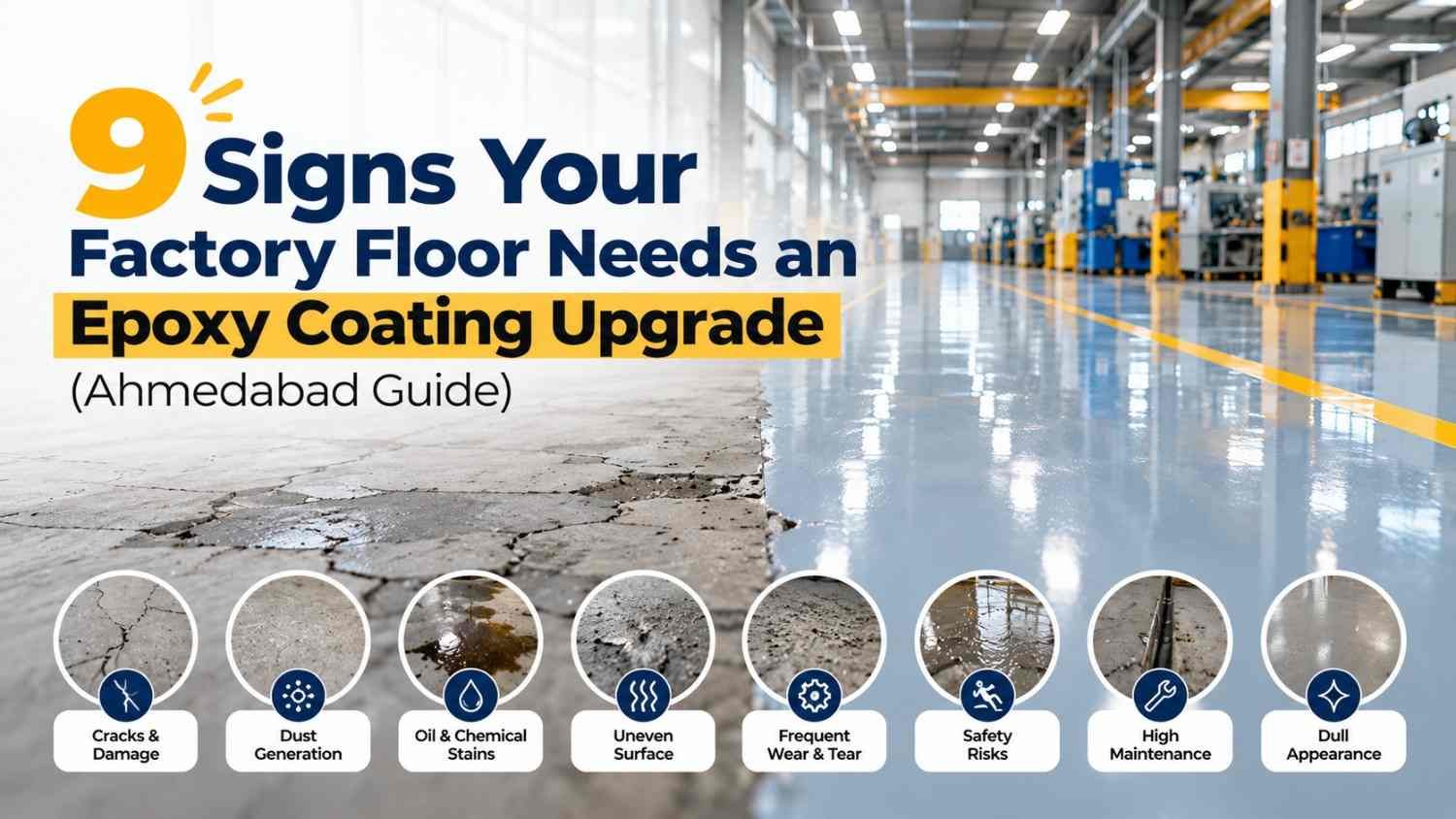
Your factory floor likely needs an epoxy coating upgrade if you see concrete dusting, cracks, peeling or worn coatings, oil and chemical stains, uneven or pitted surfaces, standing water, frequent repairs, safety incidents like slips, or difficulty keeping the floor clean. Acting early is usually far cheaper than repairing a floor after it has badly deteriorated.
Factories across Ahmedabad’s industrial belts, from Kathwada, Naroda, Vatva, and Odhav to Sanand, run floors hard every day. At Mann Enterprise, with over 10 years of experience in industrial epoxy flooring in Ahmedabad, we see the same warning signs again and again. Here is how to recognize them before they turn into downtime.
1. Concrete Dusting
If you notice fine powder on the floor, on machinery, or on products shortly after cleaning, your concrete surface is breaking down. Dusting contaminates products, wears equipment, and can create health concerns for workers. An epoxy coating seals the surface and stops dust at the source.
2. Cracks and Surface Damage
Hairline cracks may seem harmless, but they widen under vibration and heavy loads, and they let moisture and chemicals reach the slab underneath. Cracks should be repaired and sealed as part of a proper epoxy floor system before they spread.
3. Peeling, Flaking, or Worn Coatings
If an earlier paint or coating is lifting, bubbling, or wearing through in traffic lanes, it has failed. Re-coating over a failing layer without proper preparation will fail again, so the old coating needs to be removed and the surface prepared correctly.
4. Oil, Grease, and Chemical Stains
Bare or poorly sealed concrete is porous. Spills soak in, leave permanent stains, and can weaken the surface over time. Epoxy creates a non-porous barrier that makes spills easy to wipe away and protects the concrete.
5. Uneven, Pitted, or Rough Surfaces
Rough or pitted floors make cleaning difficult, can damage wheels and trolleys, and create trip hazards. Leveling and coating the floor restores a smooth, consistent surface.
6. Water Pooling or Moisture Problems
Standing water, damp patches, or slippery zones point to drainage, moisture, or sealing issues. These need to be assessed during inspection, because moisture in the slab affects how any coating bonds. In some cases, waterproofing work is needed alongside flooring.
7. Frequent Repairs and Maintenance Downtime
If patching, grinding, or repairing the same areas keeps interrupting production, the recurring cost has likely exceeded the cost of a proper long-term floor system. A durable epoxy floor reduces repeat repairs and the downtime that comes with them.
8. Slips, Falls, and Safety Incidents
Smooth worn floors, oil patches, and damaged surfaces contribute to accidents. Epoxy systems can be designed with anti-slip finishes and clear safety line marking for walkways, machinery zones, and forklift lanes.
9. Hygiene or Compliance Concerns
Pharmaceutical, food, and healthcare facilities need floors that can be cleaned thoroughly and do not harbor contamination. If your floor has cracks, joints, or porous areas that are difficult to sanitize, an upgrade to a seamless epoxy system may be necessary to meet your standards.
Quick Self-Check Table
| What You Notice | What It Usually Means | Recommended Action |
|---|---|---|
| Fine dust after cleaning | Surface breakdown (dusting) | Seal or coat with epoxy |
| Visible cracks | Structural or shrinkage cracks | Repair, then coat |
| Peeling or bubbling coating | Failed coating or poor adhesion | Remove old coating, re-prepare, recoat |
| Persistent stains | Porous, unsealed concrete | Epoxy sealing system |
| Standing water or damp spots | Moisture or drainage issue | Inspect, waterproof if needed |
| Repeated repairs | Floor reaching end of life | Full epoxy upgrade |
What Does an Epoxy Upgrade Involve?
A proper upgrade is more than painting over the old surface. Mann Enterprise follows a structured process:
- Free site inspection to identify the problem, test moisture, and assess loads
- Surface preparation with grinding or shot blasting and crack repair
- Priming for strong adhesion
- Epoxy system application, such as self-leveling, mortar, or ESD, matched to your industry
- Curing and handover inspection
Choosing the right system depends on your industry, traffic, and chemical exposure, which is why a site visit comes before any quotation.
Frequently Asked Questions
How do I know if my factory floor needs epoxy coating? Look for dusting, cracks, peeling coatings, stains, uneven surfaces, moisture problems, and frequent repairs. If you see two or more of these, an inspection is worthwhile.
Can epoxy be applied over an existing damaged floor? Yes, after proper preparation. Cracks must be repaired, loose or failed material removed, and moisture levels checked before coating.
Is epoxy flooring worth it for a factory in Ahmedabad? For most industrial facilities, yes. It reduces dust, repairs, and downtime while improving safety and cleanliness. The right system depends on your specific operation.
How long does an epoxy floor upgrade take? Most industrial projects take several days depending on area, floor condition, and the number of coats. Mann Enterprise can plan work in phases to reduce disruption to production.
Which areas of Ahmedabad does Mann Enterprise serve? We serve industrial and commercial clients across Ahmedabad, including Kathwada, Naroda, Vatva, Odhav, and surrounding areas.
Book a Free Floor Inspection with Mann Enterprise
If your factory floor shows any of these signs, get it assessed before the damage grows. Mann Enterprise offers a free site visit and honest recommendation for epoxy flooring in Ahmedabad, including industrial epoxy, self-leveling systems, and waterproofing.
Swetayan Industrial Park, Kathwada, Ahmedabad, Gujarat Phone: +91-8155986415 Website: mannenterprise.com